Tuesday, December 27, 2011

"Food Day is Every Day" Skillet Gathering


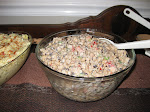
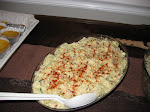
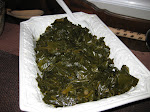
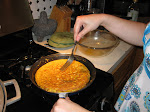
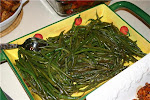
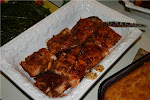
Our second Skillet Gathering for the year is dedicated to the celebration of Food Day. However due to scheduling problems, CFNI had to delay the event. So on December 11, we held our "Food Day is Every Day" Skillet Gathering brunch and dedicated the occasion to local food, mostly purchased at the 83rd Street Farmers Market in Baltimore. Our menu included a Spanish tortilla (potato, sausage, spicy chopped greens, onions, and eggs), warm kale and carrot salad, apple and pear salad, fresh bread, cheese, and mimosas. The food, company and conversation was a wonderful way to partly close out the year for CFNI.

Friday, December 23, 2011

Food for Thought (Dec.17 – Dec.23)

Food and Health

Feeding young babies solid foods such as crackers, cereals and bread, which tend to be high in salt, may set them up for a lifelong preference for salt.
http://www.latimes.com/health/la-he-babies-salt-20111221,0,6606273.story

Good digestive health may help to regulate and reduce stress in the brain. The study looked at how potential probiotics (not found in foods yet), affected the brain function of mice, and found that the presence of a specific probiotic in the gut altered behaviors relevant to anxiety and depression; as well as modulating receptors in the brain known to be involved in anxiety.
http://www.supermarketguru.com/index.cfm/go/sg.foodAndHealthNews

You may be interested in how real foods improve health and well being, taste better, reduce waste, and are friendlier to the environment, but such foods, alas, are much less profitable than those highly processed. http://www.foodpolitics.com/2011/12/the-latest-in-new-product-introductions/

The dark color in foods is the result of naturally occurring flavonoid pigments called anthocyanins. Anthocyanins protect the plant against oxidation, pests, and from damaging radiation from the sun.
http://www.supermarketguru.com/index.cfm/go/sg.viewArticle/articleId/2688

It's the cold season. Can chicken soup help me get through those miserable days? Are the wonders of chicken soup just cultural myths passed down from generation to generation, or can soup really cure a cold?
http://www.abcactionnews.com/dpp/news/health/Ask-Food-Can-chicken-soup-help-with-a-cold

Is the D.C. Department of Public Works unfairly targeting food trucks for parking violations? The food trucks, meanwhile, believe they are being unfairly targeted. Some offered evidence that enforcement officers have ignored private cars at apparently expired meters. http://www.washingtonpost.com/blogs/all-we-can-eat/post/food-trucks-cry-foul-over-parking-tickets/2011/12/23/gIQAb70hDP_blog.html

Food Safety

When we go to the grocery store to pick up dinner, we should be able to buy our food without worrying that what we put on our plates is exposing our families to dangerous antibiotic-resistant bacteria.
http://www.stopfoodborneillness.org/content/recall-prompts-more-calls-action-ag-antibiotics

In 2010, a total of 787 FTEs were working as foodborne disease epidemiologists in state, regional and local health departments in the United States. Although states investigate foodborne disease outbreaks caused by numerous pathogens, they were more likely to investigate outbreaks associated with some pathogens than others.
http://www.foodsafetynews.com/2011/12/cdc-whether-your-food-related-illness-gets-investigated-depends-on-where-you-live/

As Missouri public health officials investigate the death of a 10-day-old infant who may have succumbed to a rare Cronobacter sakazakii (C. sakazakii) infection, Walmart said it is recalling a single batch of Enfamil powdered infant formula from its stores as a cautionary measure. Walmart announced that it was removing 12.5-ounce cans Enfamil Newborn powder with lot number ZP1K7G from 3,000 stores in 49 states.
http://articles.cnn.com/2011-12-22/us/us_missouri-formula-recall_1_powdered-infant-cronobacter-powdered-formula?_s=PM:US

When the President came into office, he said that “protecting the safety of our food and drugs is one of the most fundamental responsibilities government has.” He pledged to strengthen our food safety laws and to enhance the government’s food safety performance.
http://www.whitehouse.gov/blog/2011/12/21/food-safety-holiday-season

A Clemson University food safety scientist has received nearly $543,000 to study conditions for the spread of norovirus in the elementary school environment. Norovirus is the cause of an illness that sickens millions of Americans annually who come into contact with contaminated foods, surfaces and individuals.
http://www.clemson.edu/media-relations/4016/clemson-food-safety-specialist-awarded-grant-to-help-children-avoid-food-illness/

Food Assistance

Schoolmenu.com is the fastest and easiest way to view your child's school lunch and breakfast menu! http://www.schoolmenu.com/

Figures released this month by the Agriculture Department paint a grim picture of widespread dependence nationwide but especially in Florida, where a record 3.1 million people — one in six residents — received food-stamp aid in September.
http://www.orlandosentinel.com/health/fl-food-stamp-surge-distress-20111220,0,7478084.story

Sunday, December 18, 2011

Food for Thought (Dec.10 – Dec.16)

Food and Health

Taking vitamin and mineral supplements may be linked to a shorter, not longer, life.
http://www.washingtonpost.com/national/health-science/2011/10/12/gIQAGeH7rL_story.html

When children are overweight, heart-health risk factors such as dangerous cholesterol levels and artery inflammation can start as early as age 3, according to a University of Miami study published in the current issue of the medical journal, Obesity.
http://www.stltoday.com/news/national/fat-children-face-heart-risks-as-young-as-age/article_f2822844-f147-53ad-87f2-ab108a1fb8d3.html

In the third quarter of 2011, 11% of Americans reported having ever been diagnosed with diabetes. This measurement and the 10.6% that Gallup and Healthways measured in the second quarter of this year are among the lowest levels recorded since 2009.
http://www.gallup.com/poll/151589/Diabetes-Rate-Levels-Off-2011.aspx?utm_source=tagrss&utm_medium=rss&utm_campaign=syndication

Food Safety

In collaboration with government and university specialists, organizations representing fresh-produce farmers and handlers have written enhanced food safety practices for the growing of leafy greens. http://www.cfbf.com/leafygreens/

The U.S. Food and Drug Administration is relying more often on states to inspect food plants but is failing to properly monitor those state inspections or follow through on their findings, the Department of Health and Human Services watchdog has concluded.
http://blog.usfoodsafety.com/2011/12/15/fda-faulted-over-state-inspections/

With the holiday season in full frenzy, Food Safety News presents a few food safety tips, a compilation of yuletide considerations for cooks and eaters alike. http://www.foodsafetynews.com/2011/12/time-to-eat-drink-and-be-wary/

Food Assistance

About 20 people volunteered last week to take part in a Community FoodBank of New Jersey Challenge to shop and eat for no more than $31.50 — the average weekly food stamp amount allotted to an individual in New Jersey. http://www.nj.com/news/index.ssf/2011/12/nj_community_foodbank_challeng.html

The number of Virginians relying on food stamps spiked as the economy dipped, leading to an all-time high last month of more than 900,000 individuals receiving assistance to buy groceries. http://www2.timesdispatch.com/news/2011/dec/17/tdmain01-number-of-virginians-on-food-stamps-soars-ar-1550375/

Saturday, December 10, 2011

Food for Thought (Dec. 4 – Dec. 9)

Food and Health

Santa Clara County’s ban on fast-food toys for kids has had no effect on the nutritional quality of the meals served there, but the restaurants are doing a better job of promoting the right food, or at least not promoting the junk, Stanford researchers say. http://www.foodhealthnews.com/2011/12/fast-food-toy-ban-no-aid-to-nutrition-study-says/

Fats are really the most concentrated source of energy in the foods we eat, and our bodies need that energy. Learn which fats are naughty and which are nice to your health. Then you can make smarter food choices. http://newsinhealth.nih.gov/issue/Dec2011/Feature1

When it comes to school meals, adults and kids alike are ready for a change. An extraordinary number of people sent messages to USDA in support of the agency’s proposed standards to improve school meals. http://www.healthyschoolfoodsnow.org/tremendous-support-for-usda-school-meal-changes/

Increased consumption of carbohydrate-rich foods, especially starches, may boost the risk of breast cancer recurrence, new research finds. http://news.health.com/2011/12/08/starchy-foods-may-boost-risk-of-breast-cancer-recurrence/

Few parents make a habit of feeding their kids Twinkies for breakfast. But children who eat some of the leading brands of cereal are getting just as much or more sugar as is in one of those dessert snacks, according to a new study.
http://www.foodsafetynews.com/2011/12/many-kids-cereals-as-sugary-as-desserts-review-finds/

Food Safety

Even in a year when global food prices hit record highs and both restaurant menus and retail food labels got a new look, the safety of the American food supply dominated the headlines and consumers took notice. http://www.marketwatch.com/story/food-safety-eclipses-rising-food-costs-as-top-food-story-of-2011-2011-12-08

Experts in environmental health issues have teamed with major companies to warn food industries to exercise caution when using nano-sized, man-made creations as nutritional additives, flavorings, colorings, or anti-bacterial coatings for packaging.
http://www.foodsafetynews.com/2011/12/caution-urged-with-nanoparticles-in-food/

An Ohio State University scientist and colleagues have garnered two food safety grants totaling $2.3 million from USDA. One grant is a three-year, $500,000 award from a $5.4 million University of Maryland study on "Developing Scientifically Based Consensus Food Safety Metrics for Leafy Greens and Tomatoes." The other grant will determine the extent to which wildlife contribute to antimicrobial-resistant bacteria colonization in livestock, and how much that can spread to humans. http://www.dairyherd.com/dairy-news/latest/Food-safety-is-focus-of-23-million-in-grants-135267188.html

FDA has agreed to decide by March 31, 2012 whether bisphenol A, the controversial chemical known as BPA, should be banned from use in food and beverage packaging. http://www.foodsafetynews.com/2011/12/fda-agrees-to-respond-on-bpa-risk-by-march-31/

The non-profit consumer advocacy group, Center for Science in the Public Interest (CSPI), submitted a petition to the FDA on December 8, 2011 urging it to require food makers to disclose artificial coloring additives on the front labels of their products.
http://www.foodsafetynews.com/2011/12/fda-urged-to-require-front-label-food-coloring-info/

Pre-packaged cookie dough might taste lovely, but you should resist the temptation until it has been properly baked if you want to avoid getting an E. coli infection. http://www.medicalnewstoday.com/articles/238948.php

Food Assistance

Forty-six million Americans receive food stamps, up about two-thirds from four years ago. As Congress threatens to cut the program, supermarkets, farmers and antipoverty activists have forged a coalition to try to spare it from the chopping block.
http://www.sfgate.com/cgi-bin/article.cgi?f=/c/a/2011/12/08/BU351M8O6P.DTL

Missouri farmers are eligible for aid from August storms. The declaration makes farmers in 24 northwest and west central parts of the state and 17 bordering counties who suffered losses eligible for emergency loans and assistance. http://www.stltoday.com/news/state-and-regional/missouri/mo-farmers-eligible-for-aid-from-august-storms/article_1c8f7452-b259-536c-ae16-964608484870.html

These are very desperate times. A Texas woman unable to qualify for food stamps for months walked into a state welfare office with a gun, then shot her two children and killed herself, during a seven-hour standoff, officials said Tuesday, December 6, 2011. http://www.cbc.ca/news/world/story/2011/12/06/shooting-welfare-mother-texas.html

Thursday, December 8, 2011

Food for Thought (Nov. 26 – Dec. 2)

Food and Health

To help African Americans improve their health, eating habits and oldways, a nonprofit food and nutrition education organization along with an advisory team of experts, recently unveiled The African Heritage Diet Pyramid. http://www.wfsb.com/story/16134832/african-americans-receive-their-own-food-pyramid?clienttype=printable

Heart disease, diet and activity play a significant role in the healthy lives of teens today. http://diabeticgourmet.com/bin/dgm.cgi?ID=1821

Athletes see food as fuel. You eat to get faster, stronger, to recover better, to increase your power-to-weight ratio (more muscle, less fat). How do you do that? Sports nutrition is constantly evolving as we learn more about how biology works. The current trends are toward whole foods, especially protein and vegetables, and away from processed foods and empty calories. http://www.culinate.com/columns/spaghetti_on_the_wall/food_for_athletes

Should we all go gluten free? A key protein in wheat is being questioned whether it is better to do without. http://www.nytimes.com/2011/11/27/magazine/Should-We-All-Go-Gluten-Free.html?pagewanted=all

Food Safety

Studies show that continual exposure to arsenic and lead, even at low levels, can result in serious long-term health problems, particularly for the smaller, developing bodies of children. Apple juice, one of the mainstays of kids’ fare in the US, has come under fire lately due to testing that found high levels of arsenic. http://buysafeeatwell.org/posts/2889-consumer-reports-finds-arsenic-lead-in-apple-and-grape-juice

FSIS should consider making certain regulatory information public, so says a leading non-profit organization on Nov. 30. The highly respected National Research Council of the National Academy of Sciences issued its findings during an hour-long public teleconference in a report, The Potential Consequences of Public Release of Food Safety and Inspection Service Establishment-Specific Data. http://www.fsis.usda.gov/News_&_Events/Const_Update_120211/index.asp

Chipotle sources its meat with certain standards with no hormones or antibiotics. http://www.chow.com/food-news/99834/chipotle-were-conflicted/

Food Assistance

It is true that the number of Americans who rely on food stamps is at a record high. Nearly 46 million Americans received benefits from the Supplemental Nutrition Assistance Program — better known as food stamps — this year, the highest number in recorded history. http://abcnews.go.com/blogs/politics/2011/12/fact-checking-newt-gingrichs-food-stamps-claims/

Families in need of food are invited to pick up food at the food pantry at Loch Raven Technical Academy, at 8101 LaSalle Road, Baltimore, MD, on Saturday, Dec. 17, between 9:30 and 11:30 a.m. This program is sponsored by the school and the Maryland Food Bank.
http://www.baltimoresun.com/explore/baltimorecounty/neighborhoods/lutherville-timonium/ph-tt-neighbor-loch-essen-1207-20111202,0,3996603.story

People who are well aware of the extent of food insecurity in the United States – roughly 50 million people currently self-report that they are not sure they can get enough to eat on a regular basis – may still wonder whether government programs are really needed.
http://notes.bread.org/2011/11/government-food-assistance-why-its-needed.html

Saturday, November 19, 2011

Nutrition in your 60's

Although I thought I knew a lot about this topic, my frame of reference, my parents. It was a little harder than I initially thought. I am fortunate to have had parents that had fairly good health and good appetites in their 60’s. I decided to approach this by giving some good information that will help those in their 60’s.

Why the 60’s? This is important news, as the world's aging population, those individuals over 60, is growing. It is estimated that this age group represented around 10% of the world's population in 1999; it's projected that in 2050, 20% of the world's population (over 2 billion people) will fall into this group. So what are the nutrition needs of this group of individuals?

The main focus is to be sure that you get good nutrition. As we get older our nutrition needs change. Another focus should be to choose whole foods. Whole foods are simply foods that come in their own packaging, like fruits and vegetables. Whole foods contain many nutrients that are important as we age. Staying away from processed food is a good idea also because they tend to have more sodium. There is a common theme across the decades, to eat real food and more of it.

Below you will find areas of concern for individuals over 60. I feel that this information is very useful. The information has been adapted from the health24.com website.

Lean muscle mass

Your body composition changes as you age. Interestingly, the lean muscle mass of normal men decreases from about 24kg in their 20s to about 13kg in their 70s.

This process (also referred to as "sarcopenia") can be slowed down by sufficient intake of protein, and more specifically the branched-chain amino acids (amino acids are the building blocks of protein).

Dairy, red meat and eggs are good sources of these amino acids.

Bone-mineral density

Osteoporosis affects one in three women, and one in 12 men, over the age of 50.
To preserve bone health throughout old age, it's important to include the following in your diet:

• Calcium, found in milk, cheese, yogurt, spinach and sardines.
• Vitamin D, found in egg yolk, cod liver oil, mackerel and salmon. Daily sun exposure also increases levels of this vitamin in your body.
• Vitamin K2, which is found in: green leafy vegetables such as broccoli, cabbage, turnip greens and the dark green leaves of lettuce (about 100 microgram/100g); dairy products, meat, eggs (about 50 microgram/100g); fruit and cereals (about 15 microgram/100g).
• Zinc, found in dairy products, red meat, eggs, poultry and soya beans.
• Phosphorus, found in whole grains (especially oats), dairy products, red meat, poultry and seafood.
• Magnesium, found in whole grains, spinach, whole-wheat bread, bran flakes and red meat.

Joint mobility

Osteoarthritis, which affects many people over the age of 50, can result in loss of joint mobility and can significantly decrease quality of life. It's a major cause of disability, affecting 37% of the adult population and 85% of those over 80.

The following nutrients are thought to be beneficial to osteoarthritis sufferers:

• Glucosamine and chondroitin sulfate, which are best taken in supplement form.
• Omega-3 fatty acids, found in fatty fish such as salmon, mackerel, herring, sardines and fresh tuna. If you don't eat fatty fish at least twice a week, consider taking an omega-3 supplement.

Immune function

As you get older, your body becomes more susceptible to disease. So, now is the time to give your immunity a boost.

The following nutrients could help:

• Vitamin B6, found in potatoes, sweet potatoes, bananas, chicken and mackerel.
• Folic acid, found in sweet corn, asparagus, Brussels sprouts, cabbage and fresh green vegetables.
• Vitamin A, found in sweet potatoes, carrots, cabbage, pumpkin and spinach.
• Vitamin C, found in asparagus, citrus fruit, broccoli, Brussels sprouts and peppers.
• Vitamin E, found in wheat germ, prawns, almonds, hazelnuts, peanuts and sunflower seeds.
• Zinc, found in dairy products, red meat, eggs, poultry and soya beans.
• Iron, found in spinach, dried fruit, offal, red meat, egg yolks and tuna.
• Selenium, found in brown rice, wheat germ, whole-wheat bread, poultry and tuna.

Brain and cognitive function

Mental impairment, confusion and dementia can have a severe impact on your quality of life and independence as you grow older.

Keep your mind sharp by ensuring an adequate intake of omega-3 fatty acids and protein (fatty fish are a good source of both), and a good balance of vitamins and minerals, particularly the B vitamins.

Heart health

Heart disease is the number-one killer in the world, and it's estimated that one in every three men and one in every four women will have a heart condition before the age of 60. As you grow older, your risk of suffering a heart attack or stroke increases.

Once again, be sure to get enough omega-3 fatty acids from fresh fish and/or supplements. Also make a point of including dietary antioxidants in your diet. Examples include:

• Anthocyanins, found in grapes, berries and cherries.
• Resveratrol, found in grapes and red wine.
• Lycopene, found in tomatoes.
• Lutein in spinach, kale and broccoli.
• Catechins in green tea.
• Quercetin in apples, onions and tea.
• Hesperidin in oranges.
• Sulforaphanes in broccoli, cabbage and kale.
• Diallyl sulfides in garlic.
• Isoflavones in soy beans.

Information adapted from Heath24.com

Monday, October 31, 2011

Food Day and Other Adventures

Today is the last day of October and I'm wondering whether the month has been a trick or a treat. First activity of the month involved cleaning out most of my raised bed garden. The only plants remaining are some hardy Thai hot peppers and some basil. For my first try, I had a pretty successful experience.

Second activity came with mid-way through the month we posted a new CFNI web page dedicated to Food Day with a link to the contribution we hoped to make for that celebration - "Celebrating Food Day, a Community Guidebook." But as luck would have it our website host initiated a new format around the same time and our page was lost in the transition. After a lot of back and forth, we were able to recover the page, but only after Food Day!! Luckily we did put in our guidebook introduction that the concept of Food Day was something that could be celebrated throughout the year. So hopefully all is not lost.

Third acivity came last week when I went to hear Michael Pollen speak at the Music Center at Swathmore. As I sat in my $45 seat on the Promenade Level I contemplated on how much food my ticket money could have bought a less fortunate family. To get those thoughts out of my mind I convinced myself that Pollen's lecture would help me better deliver CFNI food messages to the community. He started his lecture going through a couple of bags of groceries purchased from a local grocery store. Item by item pulled from those bags depicted "food like products" (kind of name he gave them) that were not real food, loaded with sugar, salt and other stuff, and not very healthy. In fact, he said if the label had more than 5 ingredients on it, the product wasn't real food. Morale of that lesson is to read food labels because a "healthy" food like yogurt can be ladened with lots of sugar! Another take away message was regarding pursuading people to cook. That simple activity causes people to know what they're eating and where it came from to a certain degree.

Overall, I enjoyed Pollen's presentation. However in the end, I was left with this empty filling going back to those families that can't afford to put food on the table, let alone go hear a lecture on food. Deep down the information I gained from the lecture I'm still trying to rationalize how to fit into the CFNI voice.