








Wednesday, April 20, 2011

20-Somethings-What a Young Man Thinks about Food and Nutrition

This month we're looking at Twenty-Somethings, that age in your life when you're young, care-free, and probably just beginning to make your mark on the world. The other day I googled nutrition and twenty-somethings and found 5 Healthy Living Tips for Young Men (www.fitday.com):


  1. Exercise Regularly four to six days per week to make it a life long behavior.

  2. Don't Push Yourself Too Hard, which is important for safe and healthy fitness.

  3. Eat Right to maintain overall health.

  4. Avoid Drinking and Smoking contributes to healthy living practices.

  5. Visit the Doctor because regular physical exams and check-ups keep you on point as an advocate for health promotion and prevention.

I think the focus on young men is important because the last thing they might be thinking about is nutrition and health. But what do I know - a young man I asked to comment on the subject proved me wrong. His thoughts are below:


"Being a young male in my mid-twenties, eating well portioned and healthy meals are few and far in between. I often eat an abundance of fried foods, which has been shown to have adverse effects on the body over an extended period of time. Because I'm single with no dependents, it's sometimes easier and more convenient to eat fast foods versus a home prepared meal. As I've grown older, it has become increasingly difficult to digest most fast foods. Eating home cooked meals have definitely become the best way to stay fit and also save money. There is a vast difference in the way I feel when eating out, which makes me feel sluggish and bloated, versus eating self-prepared foods, which gives me a feeling of empowerment and energy. I've found that fresh fish, spinach ravioli, ground turkey, cheese, vegetables, spaghetti and brown or white rice are the combination of foods to keep my body running smooth. On the flip side, I've discovered cutting back my consumption of red meat has helped regulate my weight and reduced many digestive problems. One dilemma I see with young men my age is eating 1 or 2 large portioned meals a day. I've noticed that eating 3 small to moderately portioned meals keeps me more energized throughout the day. That's something that I have not done consistently over the years. Making the transition to well balanced and portioned meals on a regular and more consistent basis makes for longer and healthier living. You are what you eat!"

Wednesday, March 30, 2011

Nutrition in your 30's, the Big Challenge!

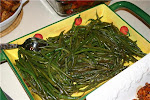
For me, in my 30's it was Thyme for me to get real about food and nutrition. Not everyone enjoys cooking the way I do. For many people, it is one of the most dreaded tasks. In my thirties, my biggest challenge was to spend less time in the kitchen and more time eating home cooked meals, this coming from someone who enjoys cooking. I had little time, I worked long hours, and volunteered much of my time in the community. To say I needed a cook was an understatement. Since I prefer eating at home during the week and taking my lunch to work, I decided to cook once and call it a week. This not only works for single 30-year-olds, but it works for 30-year-olds with young families. I know that you are thinking, that would be time consuming, I just don't have the time. I decided to calculate the time I spent thawing, prepping and cooking food during the week and I saw that it was a tremendous amount of time. I started to think, what if I only cooked one day a week? Instead of taking 30 minutes to 1 hour each evening, I take about 4 hours on the weekend and cook everything I need for the week. But how do I get started? The answer is very simple. I use Sunday as my day to cook for the week. I start by planning what I want to eat. I cook 3 meat dishes, 4 vegetable dishes, and 2 - 3 starch dishes. That way, I can mix it up and it never seems like I am eating leftover food. I plate the food up for lunch and dinner. I set out all of my Ziploc containers and I just mix it all up. Put meats together with different vegetables and different starches. On a given week, I may prepare two different kinds of chicken dishes and a fish dish. I may even do a fish, chicken, and beef dish. For vegetables, I try to cook what is in season, making sure that I cook at least 4 different kinds. For starches, I prepare brown rice, pasta, and a mixture of roasted sweet potatoes, potatoes, and butternut squash. This may not work for everyone, but it sure does work for me. For cases of extreme boredom, I keep something that is quick to thaw, like shrimp in a bag and toss with tomatoes and broccoli. Remember, you have already made the pasta. This sure to add some spice on any given night. Happy cooking!

Thursday, March 17, 2011

Nutrition in Your 30's

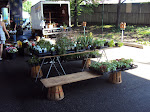
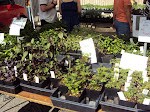
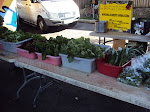
The special topic that we would like to feature this month is "Nutrition in Your 30's". First of all, I would like to say that I am a newly minted 40 year-old. So I feel I have a lot of experience as it relates to nutrition in my 30's. I know for me, the most pressing issues were related to figuring out how to eat better and most importantly, put a stop to my expanding waist line. In my 30's I started to really focus on what I was eating and set a personal goal of trying to eat a lot better. Paying more attention to fruits and vegetables was my biggest focus. Not so much for health, but really as a way of changing my figure. Well, that all changed when I realized that I wasn't going to be a size 6 anymore. And then, right in the middle of my 30's, I realized that I needed to eat better for health reasons. I wanted to be responsible and save the environment and eat locally grown foods. I began to visit farmer's markets and eat mostly locally grown foods from May - December. I started my own backyard garden, as a way of getting more vegetables and lowering my food bill. Although I don't have a green thumb, I realized that I was really good at growing things. This really gave me a feeling of accomplishment. This is Thyme and there is more to come related to "Nutrition in Your 30's".

Thursday, February 10, 2011

Working and Eating Healthy in the City

At times I have challenges getting food in the city. This is mainly because I work far from the city and sometimes there just isn't enough time. I am sure for many working people there are challenges with work that prevents them from getting healthy food including long work hours and lack of transportation. The Baltimore City Health Department has been thinking about the citizens of Baltimore getting the food they need. I was elated to hear about a new program in the city called Baltimarket, the Virual Supermarket Program. It is a program that allows city residents to visit the local library and order their food online and have it delivered to the same library the next day at no charge. Online grocery shopping is not new. As a matter of fact, Giant and Safeway both offer programs where you can shop online and have your groceries delivered for a fee. The only problem is that you have to have internet access and pay a delivery fee. These programs are generally limited to those with higher incomes. Baltimarket is a program that is designed specifically for assistance to low-income residents with low vehicle and internet access to place and receive grocery orders at their local library. Another unique feature of the program is that it encourages healthy eating, provides healthy recipes, healthy cooking demonstrations, and a $10 incentive for healthy food purchases. With a goal of improving health and wellness of Baltimore City residents, you can't go wrong with the Baltimarket program. This program was made possible through the collaborative efforts of the Btaltimore City Health Department, Santoni's Super Market, Maryland Institute and College of Art, adn the Baltimore City Enoch Pratt Free Library System. This is Thyme, and this is a great program, check it out! Click on the website to view the entire story and find out additional information on the program. http://www.baltimorehealth.org/virtualsupermarket.html

Tuesday, February 1, 2011

Dietary Guidelines for Americans 2010 Released

Since the theme of this month’s blog is working and eating healthy, the release of the Dietary Guidelines for Americans 2010 is timely. Because Americans are faced with an epidemic of overweight and obesity due to poor diet and inactivity, this time around the Guidelines focus on three succinct messages:

1. Balancing Calories

  • Enjoy your food, but eat less.
  • Avoid oversized portions.

2. Foods to Increase

  • Make half your plate fruits and vegetables.
  • Switch to fat-free or low-fat (1%) milk.

3. Foods to Reduce

  • Compare sodium in foods like soup, bread, and frozen meals – and choose the foods with lower numbers.
  • Drink water instead of sugary drinks.

For more information on the Dietary Guidelines 2010, link to http://www.cnpp.usda.gov/DGAs2010-PolicyDocument.htm.

Monday, January 31, 2011

Supermarkets, Inc.: Inside a $500 Billion Industry

Wow, I just got through watching this MSNBC program on supermarkets! Did you know that we are all participating in the largest running psychological experiment ever when we go grocery shopping? I jokingly say I don't sign up for the 'loyalty cards' - those little things that go on your key chain - because I don't want to be on another database. Well, this program talked about how those loyalty cards are used to 'profile' your buying habits down to the penny. You might save a little money, but the store builds a growing database on you and learns how to entice you even more to spend.

There are 35,000 supermarkets in the US. On average they carry about 48,000 products. Since the profit margin is very small - 1/2 to 2% - supermarkets do everything they can to get us in the store and to shop more. Milk, butter, and eggs are placed in the back of the store so that by walking through the store we'll be more apt to buy other things. No more straight, up and down aisles in new stores. They make you meander through them to draw your attention towards more items. Shopping carts are getting bigger, which makes you buy more to fill them up.

Other interesting segments of the program were onWhole Foods Market, the battle for shelf space, and independent grocery stores (barely 1 in 5 stores are independent). Tomorrow I'm going to look to see if there is a CD on the show.

In closing, a psychologist on the program recommended three tips to spending less in a supermarket: 1) don't bring the kids, 2) don't use a shopping cart; and 3) don't use a credit card.

Tuesday, January 18, 2011

Food Prices in Your Neighborhood

It's Thyme to explore food prices in your neighborhood. For the past year we have dedicated a part of the Community Food and Nutrition Institute newsletter to exploring food prices in your neighborhood. This piece has focused on the difference in prices of a market basket in a particular zip code. I hope that this has been worthwhile and has provided valuable information as you attempt to find the best food prices in your neighborhood. The first blog for January 2011 is dedicated to this topic. I will write several blogs this month, so be sure to follow closely. Food prices are a very important issue to me personally because prior to moving to the city of Baltimore, I lived in Columbia, MD. While there, I was privileged to have 4 grocery stores within a 10 mile radius of my house. Well, when I decided to move to the city, I was intrigued with the fact that my neighborhood had so much food, culture, and entertainment within walking distance. I didn't realize that the food in the neighborhood was mostly restaurants. I hadn't even taken time to scout out grocery stores. I was naive in thinking that the city presented a mirror image of the food environment in Columbia. I soon found out that in my neighborhood the closest market was Safeway. And, for lack of a better term, I felt it was overpriced when compared to other neighborhoods throughout the area, and that there were only smaller mom and pop and convenience stores. I decided to seek out alternative venues for food. My new focus became seeking out variety and lower cost food. I was surprised to find that there are many hidden jewels in the Charm City. My favorites are the Baltimore Public Markets and the Farmers Markets. I love these markets because they allow me to get produce in season that is lower in cost and it also allows me to eat locally grown food. For the next couple of weeks, I will present to you, how to find the best food prices in your neighborhood. Sit back and relax, it is Thyme you spent less money on the food you enjoy!