Tuesday, February 1, 2011

Dietary Guidelines for Americans 2010 Released

Since the theme of this month’s blog is working and eating healthy, the release of the Dietary Guidelines for Americans 2010 is timely. Because Americans are faced with an epidemic of overweight and obesity due to poor diet and inactivity, this time around the Guidelines focus on three succinct messages:

1. Balancing Calories

  • Enjoy your food, but eat less.
  • Avoid oversized portions.

2. Foods to Increase

  • Make half your plate fruits and vegetables.
  • Switch to fat-free or low-fat (1%) milk.

3. Foods to Reduce

  • Compare sodium in foods like soup, bread, and frozen meals – and choose the foods with lower numbers.
  • Drink water instead of sugary drinks.

For more information on the Dietary Guidelines 2010, link to http://www.cnpp.usda.gov/DGAs2010-PolicyDocument.htm.

Monday, January 31, 2011

Supermarkets, Inc.: Inside a $500 Billion Industry

Wow, I just got through watching this MSNBC program on supermarkets! Did you know that we are all participating in the largest running psychological experiment ever when we go grocery shopping? I jokingly say I don't sign up for the 'loyalty cards' - those little things that go on your key chain - because I don't want to be on another database. Well, this program talked about how those loyalty cards are used to 'profile' your buying habits down to the penny. You might save a little money, but the store builds a growing database on you and learns how to entice you even more to spend.

There are 35,000 supermarkets in the US. On average they carry about 48,000 products. Since the profit margin is very small - 1/2 to 2% - supermarkets do everything they can to get us in the store and to shop more. Milk, butter, and eggs are placed in the back of the store so that by walking through the store we'll be more apt to buy other things. No more straight, up and down aisles in new stores. They make you meander through them to draw your attention towards more items. Shopping carts are getting bigger, which makes you buy more to fill them up.

Other interesting segments of the program were onWhole Foods Market, the battle for shelf space, and independent grocery stores (barely 1 in 5 stores are independent). Tomorrow I'm going to look to see if there is a CD on the show.

In closing, a psychologist on the program recommended three tips to spending less in a supermarket: 1) don't bring the kids, 2) don't use a shopping cart; and 3) don't use a credit card.

Tuesday, January 18, 2011

Food Prices in Your Neighborhood

It's Thyme to explore food prices in your neighborhood. For the past year we have dedicated a part of the Community Food and Nutrition Institute newsletter to exploring food prices in your neighborhood. This piece has focused on the difference in prices of a market basket in a particular zip code. I hope that this has been worthwhile and has provided valuable information as you attempt to find the best food prices in your neighborhood. The first blog for January 2011 is dedicated to this topic. I will write several blogs this month, so be sure to follow closely. Food prices are a very important issue to me personally because prior to moving to the city of Baltimore, I lived in Columbia, MD. While there, I was privileged to have 4 grocery stores within a 10 mile radius of my house. Well, when I decided to move to the city, I was intrigued with the fact that my neighborhood had so much food, culture, and entertainment within walking distance. I didn't realize that the food in the neighborhood was mostly restaurants. I hadn't even taken time to scout out grocery stores. I was naive in thinking that the city presented a mirror image of the food environment in Columbia. I soon found out that in my neighborhood the closest market was Safeway. And, for lack of a better term, I felt it was overpriced when compared to other neighborhoods throughout the area, and that there were only smaller mom and pop and convenience stores. I decided to seek out alternative venues for food. My new focus became seeking out variety and lower cost food. I was surprised to find that there are many hidden jewels in the Charm City. My favorites are the Baltimore Public Markets and the Farmers Markets. I love these markets because they allow me to get produce in season that is lower in cost and it also allows me to eat locally grown food. For the next couple of weeks, I will present to you, how to find the best food prices in your neighborhood. Sit back and relax, it is Thyme you spent less money on the food you enjoy!

Thursday, December 23, 2010

A Year's End

We started our blog on January 29, 2009 introducing me, Hot Pepper (the more senior spiceeecy voice) and Thyme (the one who felt this was her time to shine and who infuses love into the food she prepares). The purpose of our blog is to be the public voice of the Community Food and Nutrition Institute (CFNI) and provide food and nutrition information, describe visits to local food venues, highlight our Skillet Gatherings, and display lots of pictures. In 2009, we were only able to do four blogs, not nearly enough to establish a presence.

In 2010, we pledged to make monthly entries and we accomplished our goal. We blogged about the two Skillet Gatherings held in June and October. Two blogs were dedicated to our elders (Thyme’s Aunt Bet and my dad) who passed this year, remembering how they influenced our world view of food, family and community. We launched a quarterly CFNI newsletter and linked the blog to its online version. We featured food adventures in the far away country of Columbia and closer to home reviews of Thyme’s backyard garden, Maryland farmers markets and Baltimore Public Markets.

For 2011, our purpose will be to continue the CFNI objective -- to promote food in a healthful, affordable and enjoyable way. We’ve got a lot to offer and we want Hot Pepper and Thyme to be heard and followed by others in the community. Next year will mean linking our blog to other sites, making multiple entries per month, and creating a Facebook page. Oh, and of course continuing to capture food visually with pictures.

This was a good year and we look forward to 2011. Happy holidays!

Tuesday, November 30, 2010

Hearth Warming Foods

This month’s Skillet Gathering was held in Baltimore. It is that Thyme of the year, a celebration of hearth warming foods! As winter approaches, most people want to cook food that is good, wholesome, flavorful and warming to the body. To celebrate, our Skillet Gathering focused on foods to keep you warm during the cold weather. These foods include soups, but also foods that you can cook in your slow cooker. I am a big fan of the slow cooker. In the winter, it becomes my most used kitchen appliance. At least once a week, I decide to do a clean sweep of foods in the fridge that are on the brink of going bad. I put them all in the slow cooker and try to be as creative as I can and it is a joy to walk in the house in the evening to see what treat awaits me. Most times I focus on vegetables and herbs; this includes spinach, onions, potatoes, sweet potatoes, just about any herb, whether it is thyme, rosemary, or basil. I also like to add meat to my slow cooker. My favorite is adding leftover rotisserie chicken. I enjoy using the slow cooker so much because I don’t have to watch the pot and there really is no prep time when using this appliance. I throw in all of my ingredients in the morning and just let it cook on low all day while I am at work. What a nice surprise when you walk in from a long day of work, and dinner is already cooked, I get this nice smell wafting from the kitchen. All you have to do is serve it up. I even cook my brown rice in large batches, so all I have to do is warm it up. Now this is a meal that warms you to the core!

The Skillet Gathering menu included our favorite soup, Sweet Potato and Sausage Soup. We also added a new one that seemed nice for the season, Curried Butternut Squash Soup. Both were amazingly delicious. We also prepared Autumn Herbed Chicken with Fennel and Squash, a slow cooker recipe. And of course, no gathering would be complete without dessert, bread pudding with whiskey sauce. And don’t forget, nothing like a warm drink to get you feeling toasty, warm apple cider. It was important to us to use vegetables that were in season, butternut squash and sweet potatoes were the staple food that was available at the time, so we decided to incorporate them into all of our dishes.

As always, our Skillet Gatherings are a time of food, conversation, and good food. In attendance there were college students, the young and working, and some old school, to teach us a little about cooking. This always makes for lively conversation about food. The most important thing we wanted people to take home from this Skillet Gathering were tools on how to prepare hearth warming foods that are simple to prepare and that allow you to feed your family with fresh ingredients.

Stay tuned for our next Skillet Gathering! We hope that you will be able to attend soon!

Monday, October 18, 2010

Tuesday, September 14, 2010

It's Thyme to Explore the Baltimore Public Markets

Baltimore’s public markets are the oldest continuously operating public market system in the United States. This is just one of the things that make the city of Baltimore so famous. The markets are Baltimore’s oldest institution, older than its health department and even the Mayor’s Office.

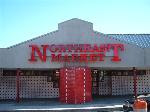
I am fortunate to live near the Northeast Market. Before moving to Baltimore, I lived in Columbia, MD for a short time. I was fortunate to have every major grocery store chain near my home within a five minutes drive. But when I moved to Baltimore, I was amazed that there wasn’t much in the way of grocery stores. The closest store to me was the Safeway on Boston Street. Since I am a foodie, I have an uncanny ability to seek out food in even the most desolate food environments. I happened upon the Northeast Market and was just amazed. In researching the history of these markets I found that the first market was conceived when Baltimore was only 21 years old in 1751. That first market was completed in 1763 with the aid of a public lottery. Eventually, there were 11 Baltimore City Public Markets. Each market was originally constructed of wood and most had a second story which was used for assembly purposes; armory, political, social and entertainment. Most were plagued by fire at some point in time and now are built mostly of concrete, cinder block and brick. The original markets were open air stalls, but today, they are all enclosed structures.

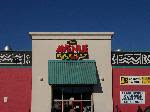
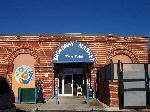
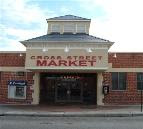
Today, there are 5 markets; Avenue Market, Broadway Market, Cross Street Market, Hollins Market, and Northeast Market. In 1995 the Baltimore Public Markets Corporation (BPMC) was established as a non-profit organization to operate the public markets. In 2005, BPMC and Lexington Market Inc. entered into a co-teaming agreement. This was not a merger and the two entities still remain separate and distinct. Although the character of the markets has changed drastically over the last two centuries, they are still a significant institution that reflects the past and future character of the City’s neighborhoods.

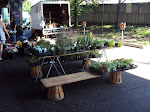
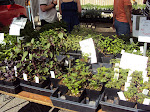
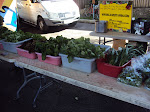
Go and experience your nearest public market. Experience the personality of unique boutiques, eateries and fresh food, produce and bakery shops. They have just about everything your local grocery store offers; fresh meats, fish, produce, baked goods. You name it, your public market probably has it.

According the Baltimore Public Markets' website (http://www.bpmarkets.com/), these markets are considered the last stronghold of independent food merchants who trade on personalized service and the quality of their merchandise in an atmosphere that still reflects community. You should definitely support your local merchants and check out your closest Baltimore public market.