Thursday, December 23, 2010
A Year's End
We started our blog on January 29, 2009 introducing me, Hot Pepper (the more senior spiceeecy voice) and Thyme (the one who felt this was her time to shine and who infuses love into the food she prepares). The purpose of our blog is to be the public voice of the Community Food and Nutrition Institute (CFNI) and provide food and nutrition information, describe visits to local food venues, highlight our Skillet Gatherings, and display lots of pictures. In 2009, we were only able to do four blogs, not nearly enough to establish a presence.
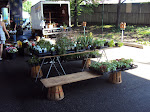
In 2010, we pledged to make monthly entries and we accomplished our goal. We blogged about the two Skillet Gatherings held in June and October. Two blogs were dedicated to our elders (Thyme’s Aunt Bet and my dad) who passed this year, remembering how they influenced our world view of food, family and community. We launched a quarterly CFNI newsletter and linked the blog to its online version. We featured food adventures in the far away country of Columbia and closer to home reviews of Thyme’s backyard garden, Maryland farmers markets and Baltimore Public Markets.
For 2011, our purpose will be to continue the CFNI objective -- to promote food in a healthful, affordable and enjoyable way. We’ve got a lot to offer and we want Hot Pepper and Thyme to be heard and followed by others in the community. Next year will mean linking our blog to other sites, making multiple entries per month, and creating a Facebook page. Oh, and of course continuing to capture food visually with pictures.
This was a good year and we look forward to 2011. Happy holidays!
In 2010, we pledged to make monthly entries and we accomplished our goal. We blogged about the two Skillet Gatherings held in June and October. Two blogs were dedicated to our elders (Thyme’s Aunt Bet and my dad) who passed this year, remembering how they influenced our world view of food, family and community. We launched a quarterly CFNI newsletter and linked the blog to its online version. We featured food adventures in the far away country of Columbia and closer to home reviews of Thyme’s backyard garden, Maryland farmers markets and Baltimore Public Markets.
For 2011, our purpose will be to continue the CFNI objective -- to promote food in a healthful, affordable and enjoyable way. We’ve got a lot to offer and we want Hot Pepper and Thyme to be heard and followed by others in the community. Next year will mean linking our blog to other sites, making multiple entries per month, and creating a Facebook page. Oh, and of course continuing to capture food visually with pictures.
This was a good year and we look forward to 2011. Happy holidays!
Tuesday, November 30, 2010
Hearth Warming Foods
This month’s Skillet Gathering was held in Baltimore. It is that Thyme of the year, a celebration of hearth warming foods! As winter approaches, most people want to cook food that is good, wholesome, flavorful and warming to the body. To celebrate, our Skillet Gathering focused on foods to keep you warm during the cold weather. These foods include soups, but also foods that you can cook in your slow cooker. I am a big fan of the slow cooker. In the winter, it becomes my most used kitchen appliance. At least once a week, I decide to do a clean sweep of foods in the fridge that are on the brink of going bad. I put them all in the slow cooker and try to be as creative as I can and it is a joy to walk in the house in the evening to see what treat awaits me. Most times I focus on vegetables and herbs; this includes spinach, onions, potatoes, sweet potatoes, just about any herb, whether it is thyme, rosemary, or basil. I also like to add meat to my slow cooker. My favorite is adding leftover rotisserie chicken. I enjoy using the slow cooker so much because I don’t have to watch the pot and there really is no prep time when using this appliance. I throw in all of my ingredients in the morning and just let it cook on low all day while I am at work. What a nice surprise when you walk in from a long day of work, and dinner is already cooked, I get this nice smell wafting from the kitchen. All you have to do is serve it up. I even cook my brown rice in large batches, so all I have to do is warm it up. Now this is a meal that warms you to the core!
The Skillet Gathering menu included our favorite soup, Sweet Potato and Sausage Soup. We also added a new one that seemed nice for the season, Curried Butternut Squash Soup. Both were amazingly delicious. We also prepared Autumn Herbed Chicken with Fennel and Squash, a slow cooker recipe. And of course, no gathering would be complete without dessert, bread pudding with whiskey sauce. And don’t forget, nothing like a warm drink to get you feeling toasty, warm apple cider. It was important to us to use vegetables that were in season, butternut squash and sweet potatoes were the staple food that was available at the time, so we decided to incorporate them into all of our dishes.
As always, our Skillet Gatherings are a time of food, conversation, and good food. In attendance there were college students, the young and working, and some old school, to teach us a little about cooking. This always makes for lively conversation about food. The most important thing we wanted people to take home from this Skillet Gathering were tools on how to prepare hearth warming foods that are simple to prepare and that allow you to feed your family with fresh ingredients.
Stay tuned for our next Skillet Gathering! We hope that you will be able to attend soon!
The Skillet Gathering menu included our favorite soup, Sweet Potato and Sausage Soup. We also added a new one that seemed nice for the season, Curried Butternut Squash Soup. Both were amazingly delicious. We also prepared Autumn Herbed Chicken with Fennel and Squash, a slow cooker recipe. And of course, no gathering would be complete without dessert, bread pudding with whiskey sauce. And don’t forget, nothing like a warm drink to get you feeling toasty, warm apple cider. It was important to us to use vegetables that were in season, butternut squash and sweet potatoes were the staple food that was available at the time, so we decided to incorporate them into all of our dishes.
As always, our Skillet Gatherings are a time of food, conversation, and good food. In attendance there were college students, the young and working, and some old school, to teach us a little about cooking. This always makes for lively conversation about food. The most important thing we wanted people to take home from this Skillet Gathering were tools on how to prepare hearth warming foods that are simple to prepare and that allow you to feed your family with fresh ingredients.
Stay tuned for our next Skillet Gathering! We hope that you will be able to attend soon!
Monday, October 18, 2010
October CFNI Newsletter Released
The October issue of the Community Food and Nutrition Institute newsletter was released on the web, www.communityfoodandnutrition.org/newsletter.asp.
Tuesday, September 14, 2010
It's Thyme to Explore the Baltimore Public Markets
Baltimore’s public markets are the oldest continuously operating public market system in the United States. This is just one of the things that make the city of Baltimore so famous. The markets are Baltimore’s oldest institution, older than its health department and even the Mayor’s Office.
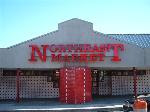
I am fortunate to live near the Northeast Market. Before moving to Baltimore, I lived in Columbia, MD for a short time. I was fortunate to have every major grocery store chain near my home within a five minutes drive. But when I moved to Baltimore, I was amazed that there wasn’t much in the way of grocery stores. The closest store to me was the Safeway on Boston Street. Since I am a foodie, I have an uncanny ability to seek out food in even the most desolate food environments. I happened upon the Northeast Market and was just amazed. In researching the history of these markets I found that the first market was conceived when Baltimore was only 21 years old in 1751. That first market was completed in 1763 with the aid of a public lottery. Eventually, there were 11 Baltimore City Public Markets. Each market was originally constructed of wood and most had a second story which was used for assembly purposes; armory, political, social and entertainment. Most were plagued by fire at some point in time and now are built mostly of concrete, cinder block and brick. The original markets were open air stalls, but today, they are all enclosed structures.
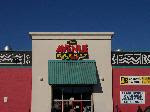
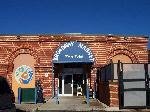
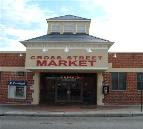
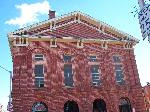
Today, there are 5 markets; Avenue Market, Broadway Market, Cross Street Market, Hollins Market, and Northeast Market. In 1995 the Baltimore Public Markets Corporation (BPMC) was established as a non-profit organization to operate the public markets. In 2005, BPMC and Lexington Market Inc. entered into a co-teaming agreement. This was not a merger and the two entities still remain separate and distinct. Although the character of the markets has changed drastically over the last two centuries, they are still a significant institution that reflects the past and future character of the City’s neighborhoods.
Go and experience your nearest public market. Experience the personality of unique boutiques, eateries and fresh food, produce and bakery shops. They have just about everything your local grocery store offers; fresh meats, fish, produce, baked goods. You name it, your public market probably has it.
According the Baltimore Public Markets' website (http://www.bpmarkets.com/), these markets are considered the last stronghold of independent food merchants who trade on personalized service and the quality of their merchandise in an atmosphere that still reflects community. You should definitely support your local merchants and check out your closest Baltimore public market.
I am fortunate to live near the Northeast Market. Before moving to Baltimore, I lived in Columbia, MD for a short time. I was fortunate to have every major grocery store chain near my home within a five minutes drive. But when I moved to Baltimore, I was amazed that there wasn’t much in the way of grocery stores. The closest store to me was the Safeway on Boston Street. Since I am a foodie, I have an uncanny ability to seek out food in even the most desolate food environments. I happened upon the Northeast Market and was just amazed. In researching the history of these markets I found that the first market was conceived when Baltimore was only 21 years old in 1751. That first market was completed in 1763 with the aid of a public lottery. Eventually, there were 11 Baltimore City Public Markets. Each market was originally constructed of wood and most had a second story which was used for assembly purposes; armory, political, social and entertainment. Most were plagued by fire at some point in time and now are built mostly of concrete, cinder block and brick. The original markets were open air stalls, but today, they are all enclosed structures.
Today, there are 5 markets; Avenue Market, Broadway Market, Cross Street Market, Hollins Market, and Northeast Market. In 1995 the Baltimore Public Markets Corporation (BPMC) was established as a non-profit organization to operate the public markets. In 2005, BPMC and Lexington Market Inc. entered into a co-teaming agreement. This was not a merger and the two entities still remain separate and distinct. Although the character of the markets has changed drastically over the last two centuries, they are still a significant institution that reflects the past and future character of the City’s neighborhoods.
Go and experience your nearest public market. Experience the personality of unique boutiques, eateries and fresh food, produce and bakery shops. They have just about everything your local grocery store offers; fresh meats, fish, produce, baked goods. You name it, your public market probably has it.
According the Baltimore Public Markets' website (http://www.bpmarkets.com/), these markets are considered the last stronghold of independent food merchants who trade on personalized service and the quality of their merchandise in an atmosphere that still reflects community. You should definitely support your local merchants and check out your closest Baltimore public market.
Tuesday, August 17, 2010
Daddy's Garden
Today’s blog is a personal reflection but speaks to the heart of how food and family are linked to health and quality of life. I’m taking this moment because my father passed away last month. Daddy was 89 years old and as far as I can remember he always had a garden in the back of his house in Galena Park, TX. He grew mustards, collards, okra, tomatoes, and bell peppers. I didn’t get to see the garden all the time, but I sure got to eat the fruits of his labor during every visit. You see, Daddy was a great cook, a keeper of tradition when it came to Louisiana style cooking. He also had a very strict, healthy regiment for eating and preparing his own meals. Every day, no matter what time he got up, started with breakfast. Up until about three years ago, he lived alone and cooked his meals in bulk, froze individual servings, and micro-waved them as needed. You could go to Daddy’s house and be served shrimp and okra, rice, and a tomato salad at the drop of a hat. And for dessert you’d get his home-made pound cake and Blue Bell Homemade Vanilla Ice Cream. He’d simply pull these items from his freezer.
In 2001, Daddy turned over the soil in his garden and planted grass. According to him, he was slowing down and didn’t have the energy to tend to a garden anymore. Lucky for him, his new garden was right across the street. It wasn’t really his, but a community garden tended by others in his neighborhood. On one visit back home I had the pleasure of meeting Mr. Goodlow, one of the founding members who started the Galena Park Manor Community Garden in 1990. He was carrying a couple of buckets of freshly picked okra out of the garden. People like Mr. Goodlow let Daddy come over and get as much okra, mustards, and tomatoes as he wanted. These folks gardened for the pure joy of working the soil, seeing things grow and sharing their produce with family, neighbors and friends.
When Daddy gave me his recipe for shrimp and okra, I asked him the types of spices he used. Laughingly, he said, “I grew up where all we had was salt, pepper, onion, garlic, sugar, and maybe a little cayenne to season food. I still cook that way and my food taste delicious.” I say amen to that because even when I add gumbo file’, oregano, and thyme to this dish, it never has that down home Louisiana flavor like Daddy’s shrimp and okra.
Daddy lived with me this past year and a half. Even though taking care of an elderly parent can be challenging at times, I’ll always cherish the experience. While his health issues were a challenge, our biggest points of consternation were over food. He said I cooked food for rich people and he cooked food for working folks. He insisted on cooking his own food. I argued that he wasn’t going to burn my house down by nodding off to sleep while watching the cabbage be cooked to death! We called each other stubborn and compromised in the end. He only cooked if someone else was home. And joy upon joy I learned how to make red beans, mustard greens, and shrimp and okra the down home way from a master!
In 2001, Daddy turned over the soil in his garden and planted grass. According to him, he was slowing down and didn’t have the energy to tend to a garden anymore. Lucky for him, his new garden was right across the street. It wasn’t really his, but a community garden tended by others in his neighborhood. On one visit back home I had the pleasure of meeting Mr. Goodlow, one of the founding members who started the Galena Park Manor Community Garden in 1990. He was carrying a couple of buckets of freshly picked okra out of the garden. People like Mr. Goodlow let Daddy come over and get as much okra, mustards, and tomatoes as he wanted. These folks gardened for the pure joy of working the soil, seeing things grow and sharing their produce with family, neighbors and friends.
When Daddy gave me his recipe for shrimp and okra, I asked him the types of spices he used. Laughingly, he said, “I grew up where all we had was salt, pepper, onion, garlic, sugar, and maybe a little cayenne to season food. I still cook that way and my food taste delicious.” I say amen to that because even when I add gumbo file’, oregano, and thyme to this dish, it never has that down home Louisiana flavor like Daddy’s shrimp and okra.
Daddy lived with me this past year and a half. Even though taking care of an elderly parent can be challenging at times, I’ll always cherish the experience. While his health issues were a challenge, our biggest points of consternation were over food. He said I cooked food for rich people and he cooked food for working folks. He insisted on cooking his own food. I argued that he wasn’t going to burn my house down by nodding off to sleep while watching the cabbage be cooked to death! We called each other stubborn and compromised in the end. He only cooked if someone else was home. And joy upon joy I learned how to make red beans, mustard greens, and shrimp and okra the down home way from a master!
Thursday, July 22, 2010
July CFNI Newsletter Released
The July issue of the Community Food and Nutrition Institute newsletter was released on the web, http://www.communityfoodandnutrition.org/Newsletter.asp.
Tuesday, June 22, 2010
Skillet Gathering Celebrating Juneteenth June 19, 2010
In the celebratory spirit of Juneteenth, the Community Food and Nutrition Institute (CFNI) held our first 2010 Skillet Gathering. For those of you who don’t know what Juneteenth is, here’s a little bit of history.
President Lincoln issued the Emancipation Proclamation on January 1, 1863. However, two and a half years later, on June 19, 1865, Union soldiers sailed into Galveston, Texas to announce the end of the Civil War, and read aloud General Order #3 freeing the quarter-million slaves residing in the state. The day became a celebration of former slaves who’d been denied the tools of literacy; Juneteenth helped them remember the day in oral history. In the past and now, Juneteenth celebrations commemorate the end of slavery and focus on education and self improvement. To this day traditional and popular foods include barbecue and strawberry soda. Communities spent their little money to buy common grounds to hold their Juneteenth celebrations on “emancipation grounds.” One of the earliest documented land purchases in the name of Juneteenth was organized by Rev. Jack Yates. This fund-raising effort yielded $1,000 and the purchase of Emancipation Park in Houston, Texas in 1872. Other communities across the state have similar parks. While Juneteenth is not yet recognized as a national holiday, it has been approved and celebrated as a state holiday in 36 states, including Arkansas, Texas, Florida, Oklahoma, Delaware, Alaska, Idaho, Iowa, California, Wyoming, Illinois, Missouri, Connecticut, Louisiana, New Jersey, New York, Colorado, Oregon, Kentucky, Michigan, New Mexico, Virginia, Washington State, Tennessee, Massachusetts, North Carolina, West Virginia, South Carolina and the District of Columbia.
So on June 19, 2010 the CFNI Skillet Gathering was a time to honor the ancestors, tradition, food and community. We welcomed family and friends. Appetizers were served. We recounted the history of Juneteenth. Thyme introduced one of our guests, a historian, who cited an ode to the ancestors. We all said “Ashay” in response to his cadence and some of us remembered loved ones who’ve passed away by calling out their names. Hot Pepper talked about the menu and why we picked the foods.
President Lincoln issued the Emancipation Proclamation on January 1, 1863. However, two and a half years later, on June 19, 1865, Union soldiers sailed into Galveston, Texas to announce the end of the Civil War, and read aloud General Order #3 freeing the quarter-million slaves residing in the state. The day became a celebration of former slaves who’d been denied the tools of literacy; Juneteenth helped them remember the day in oral history. In the past and now, Juneteenth celebrations commemorate the end of slavery and focus on education and self improvement. To this day traditional and popular foods include barbecue and strawberry soda. Communities spent their little money to buy common grounds to hold their Juneteenth celebrations on “emancipation grounds.” One of the earliest documented land purchases in the name of Juneteenth was organized by Rev. Jack Yates. This fund-raising effort yielded $1,000 and the purchase of Emancipation Park in Houston, Texas in 1872. Other communities across the state have similar parks. While Juneteenth is not yet recognized as a national holiday, it has been approved and celebrated as a state holiday in 36 states, including Arkansas, Texas, Florida, Oklahoma, Delaware, Alaska, Idaho, Iowa, California, Wyoming, Illinois, Missouri, Connecticut, Louisiana, New Jersey, New York, Colorado, Oregon, Kentucky, Michigan, New Mexico, Virginia, Washington State, Tennessee, Massachusetts, North Carolina, West Virginia, South Carolina and the District of Columbia.
So on June 19, 2010 the CFNI Skillet Gathering was a time to honor the ancestors, tradition, food and community. We welcomed family and friends. Appetizers were served. We recounted the history of Juneteenth. Thyme introduced one of our guests, a historian, who cited an ode to the ancestors. We all said “Ashay” in response to his cadence and some of us remembered loved ones who’ve passed away by calling out their names. Hot Pepper talked about the menu and why we picked the foods.
- Appetizer – grilled shrimp and mango salsa. Served because we wanted only one appetizer and this one was summery, cool, and had a little spice.
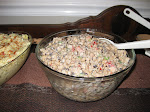
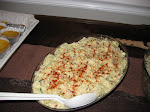
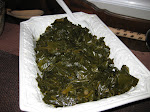
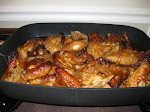
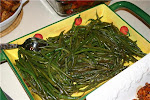
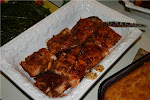
- Traditional Juneteenth Meal – barbeque chicken wings, potato salad, black-eye pea salad, collard greens, mini corn casserole cups, cold lemonade tea. These foods represented the traditional foods served during past celebrations.
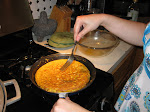
- A Touch of Spain – food demonstration on how to make a Spanish-style tortilla served with homemade Sangria (alcoholic and non-alcoholic). We want to highlight another culture during our Skillet Gatherings. A friend from Spain was visiting and volunteered to make a Spanish tortilla, which is a combination of eggs, potatoes, onion, and anything else you want to add prepared on top of the stove in a skillet. She showed us how to make a plain tortilla and a chorizo tortilla.
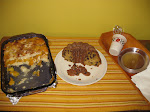
- Dessert – peach cobbler a la mode and brown sugar & chocolate chip pound cake with maple espresso glaze. Thyme did a twist on the pound cake and Hot Pepper likes peach cobbler.
Our Skillet Gatherings are about community, food, and conversation. They also serve as a way to spread the word about CFNI and raise funds for our activities. This time around we featured aprons, t-shirts, and bags with the Skillet Gathering logo. Our yellow aprons were especially a big hit. If you’d like to order one of these items, click here.
Subscribe to:
Posts (Atom)